The things I am going to work on are:
- The design of the serious game on testing
- Setting up a panel discussion on Test Informed Learning with Examples
- Design of the continuation of the study with test experts
The things I am going to work on are:
The conference took place in a university building, which, although located right in the city centre, has a very quiet, almost serene atmosphere.
I arrived on Monday, just in time for the Academy for Software Engineering Education & Training (ASEE&T) workshop which consisted of four invited talks related to Software Engineering education, the field in which I am a practitioner and researcher. It was very interesting to see all the different perspectives and ideas on this field. Some presentations where very relatable to, while others showed a completely different vision from my own. I guess that is exactly what makes these kinds of conferences interesting.
Although the social program with a boat trip on the Donau (or Danube in German), in the evening sounded very interesting, I opted to spent my time visiting the city on foot during a 10k run. This is much needed practice for my upcoming marathon.
After the opening of the conference, a keynote was presented on the balance between design qualities. It also featured a call to action to incorporate meaningful, real world projects in SE programs. I agree with this, and the approach presented had some interesting ideas. I think the problems with this approach are sort of universal, since the description was relatable for me.
Next, four presentations followed on AI and Machine Learning. Unavoidable it seems these days. The first presentation featured some interesting ideas on role playing games with LLM’s for students. I think we can incorporate this in our program.
Followed by these interesting presentations in the morning and an excellent lunch, I presented our article at the end of the afternoon during a set of other journal first papers. One about serious gaming, and one on parsons problems. Both very interesting!
Finally, after this fully packed day, I returned home by train.
]]>Therefore, I want to develop a serious game on testing. Players can test a system under test in different ways. Maybe they can choose approaches, test cases or explore the system in another way. All aimed at changing the mindset of students from their “developer approach” to a “divergent tester” approach.

To be able to do this, I attended the design of serious games summer school at the University of Tallinn, Estonia. It was an excellent experience, with different methods applied to teach us, a group of eleven students, the ins-and-outs of serious game development.
Of course a course of a week is not equivalent to a masters program, however, it did provide me with some essential knowledge on the process of developing games, the use of some platforms to develop a digital serious game, and also ways to evaluate the impact of a game on the students as an indication of the engagement.
During the week we worked in a group of three on the development of a serious game to learn teenagers how to properly do laundry. The labels in clothing and other textiles are hard to understand. The impact of doing the laundry in a wrong way is bad for the clothes, but also for the environment. Our game aims to help the player with the complex task of doing laundry in the correct way and the impact on the environment when done correctly.

The game consists of different levels where the player is presented with different quests. While performing these quests, the laundry labels are introduced, the operation of a washing machine is shown and the level of knowledge after these quests is assessed by for example a memory game.

This is of course completely different from the idea that I have for my research, but to produce this game, we had to follow the complete process just as I want to do for the testing game. Also, practising the use of the GDevelop tool made me realize that it could be a good idea to develop a digital prototype first before producing an offline game, which was my initial intention. The benefits of a digital game are extensive, since it is far easier to make changes and to distribute it for pilot-testing.
All in all I believe it was a great way to spend the first week of my summer holiday this way. Tallinn is a great city, also for running along the Baltic Sea, and the summer school exceeded my expectations.

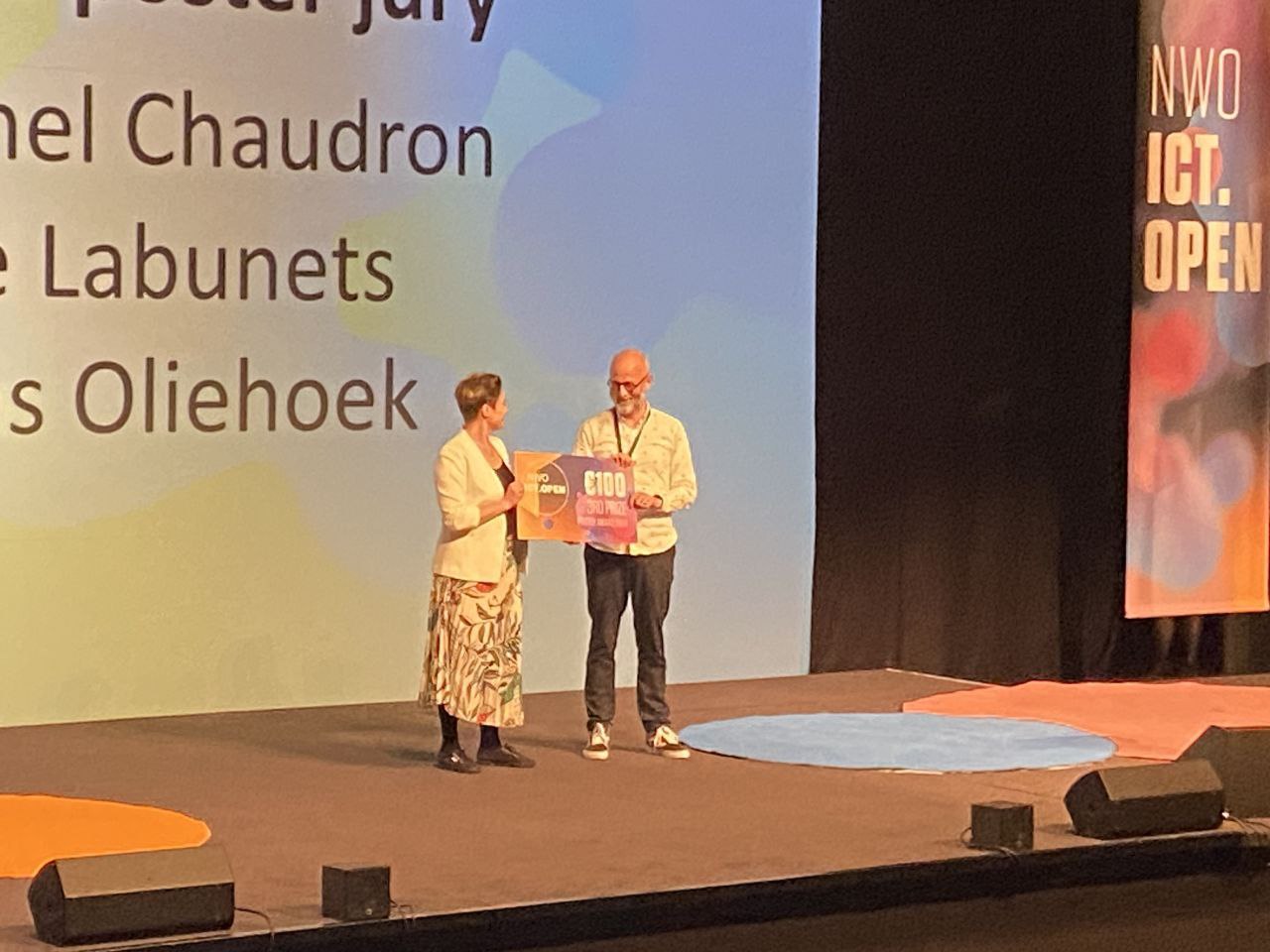
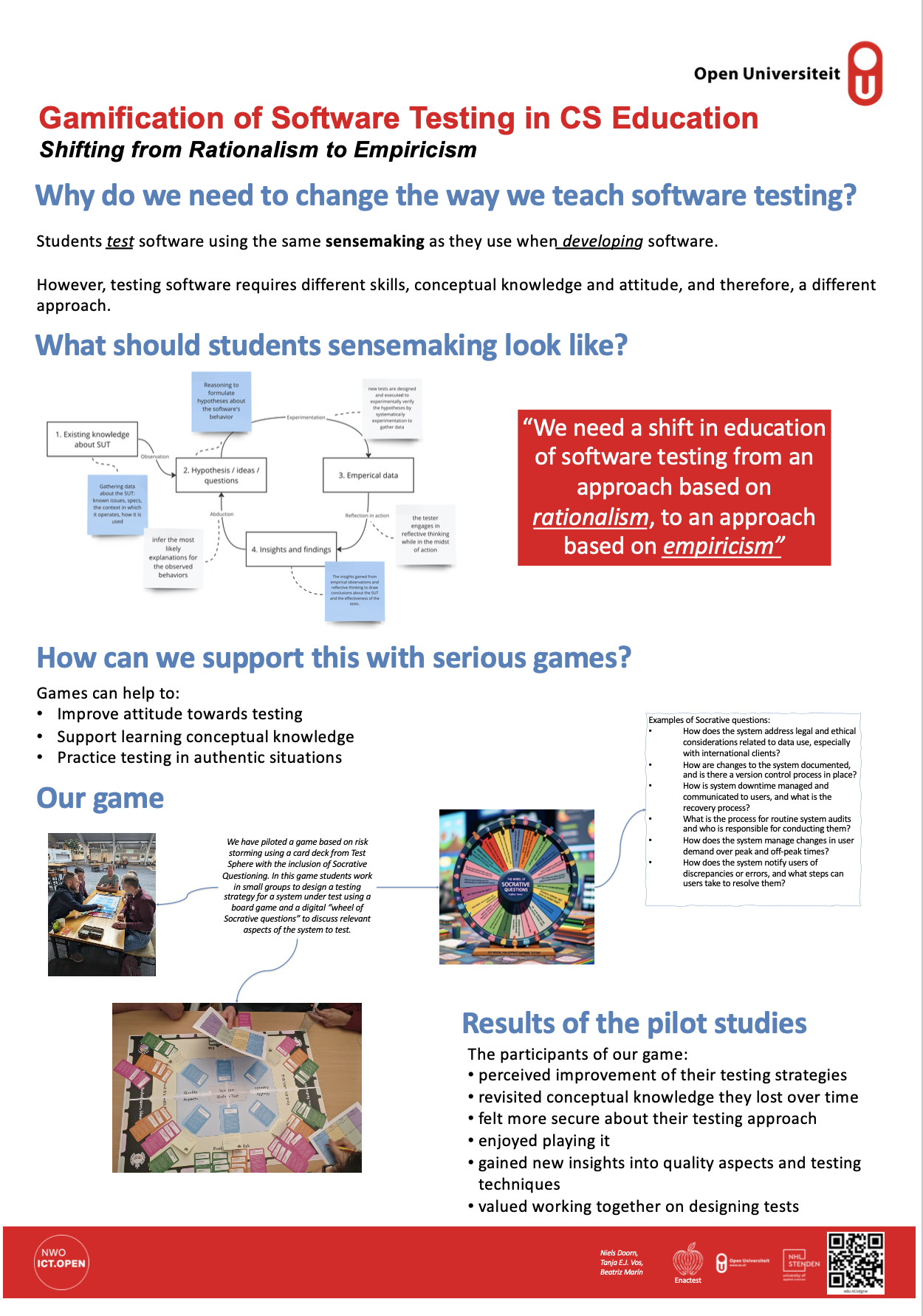
The abstract for this poster reads:
This poster highlights our research into using a serious game to help teaching computer science students software testing to shift from an approach stemmed in rationalism to one more stemmed in empericism. In the industry, software testing is widely recognized as the default way to assess software quality. Many studies have been performed to demonstrate the need to improve testing education from the beggining of Computer Science related degrees. However, for various reasons, Computer Science educators struggle to effectively include software testing in their curricula.
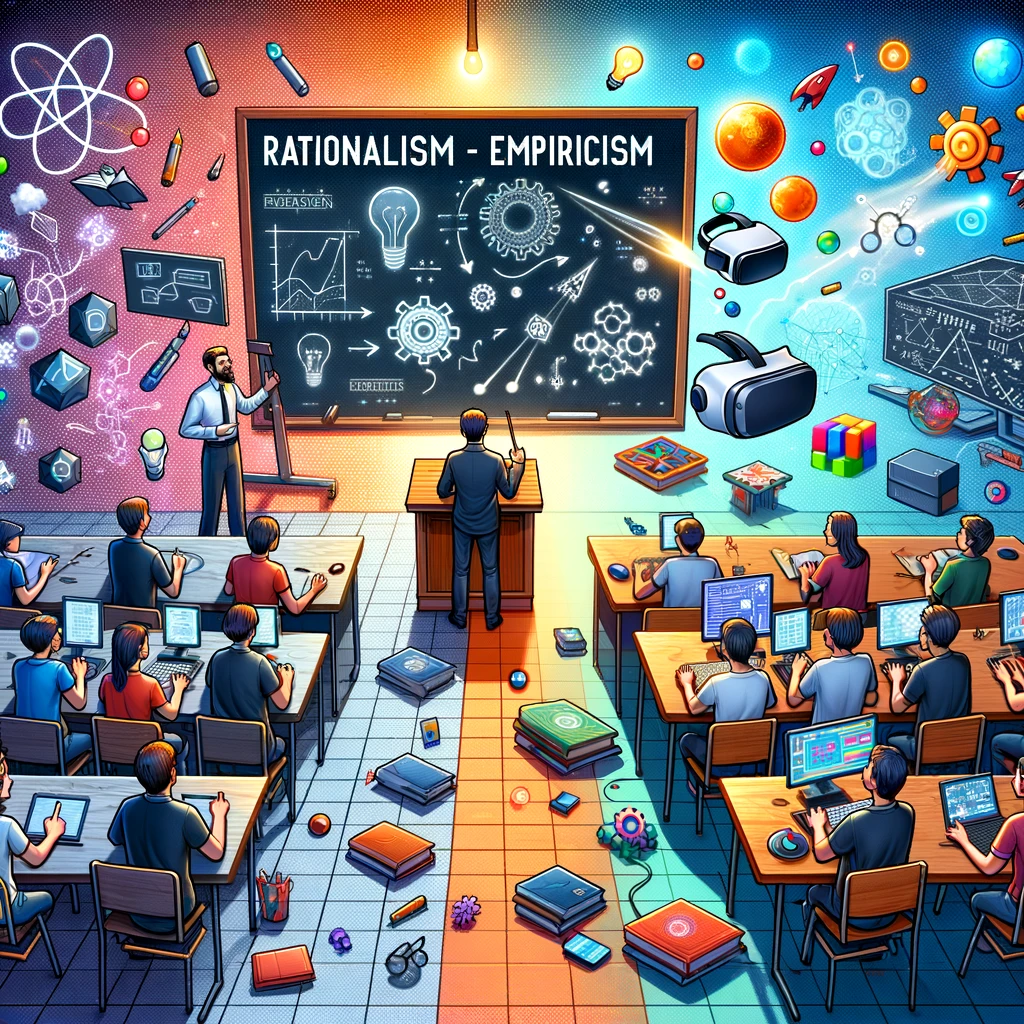
To fill the gap of novel techniques for testing education, our prior research revealed that students often adopt a so-called ‘developer approach’ in creating tests for software systems, utilizing primarily their conceptual knowledge from their programming courses. These students see testing as a problem-solving task, rooted in rational thinking. We advocate that software testing should not only be done from a ratiolism perspective, but also from a empericism perspective. Testing should be like small scientific experiments, where students use heuristics and exploration to form hypotheses about how the system should work, and then experiment to test these hypotheses and analyze the system’s feedback.
To support educators in reaching these learning outcomes, we began using gamification and developing a serious game. We use socrative questioning to elicitate critical thinking skills of the students to identify risks concerning the system under test. The anecdotal results from pilot studies suggest that incor- porating such interactive learning methods in computer science programs could change how software testing is understood and experiences by students.
On the INTED2024 conference I presented our work on developing a serious game to improve software testing education. For those interested:
My presentation was part of the “Computer Science and Cybersecurity Education” session, at the end of the first day of the two day conference. Other presentations included topics on gamification of professional skills, the design of curricula on cyber security and chat bots for first year students. This diverse group made for a nice audience and a positive vibe.
My presentation was at the end of a very intensive but interesting day with lots of presentations on AI, gamification and innovation in education.
In the dynamic landscape of software development, testing has emerged as the most commonly used technique for measuring software quality. Despite its significance, software testing often receives insufficient attention in computer science education, leading to suboptimal testing practices among students and graduates.
Teaching software testing is a complex intellectual activity for which students need to allocate multiple cognitive resources at the same time. A systematically developed body of knowledge of didactic approaches, effects of educational settings, and learning outcomes is lacking.
As a first step in determining how software testing education can be improved, we have studied the sensemaking process of students designing test cases using an online modelling tool. We continue this research by studying the approaches taken by test experts when designing test cases. By comparing students to these experts, we will know where the deficiencies lie for them and what we need to train them on. We can use this knowledge to develop instructional designs that can be used in different educational contexts.
To address this issue, the presentation will shed light on the intricate process of teaching software testing.
Key Highlights:
This presentation marks a significant stride toward bridging the gap between theory and practice in software testing education. Join us as we uncover valuable insights that will pave the way for a more effective approach to teaching this essential skill.
About the Speaker:
Niels Doorn is a dedicated PhD Student at the Open Universiteit, specializing in software testing methodologies. His dual role as a Team Leader and Lecturer / Researcher at the NHL Stenden University of Applied Sciences reflects his commitment to advancing computer science education. With a keen focus on improving software testing practices, Niels brings a unique perspective to the table.
]]>I learned a lot from the media training, especially how to get your point across when being interviewed, despite the interviewer’s intentions to make you say something else. Also, how to use social media to get your science results to be used for a wider audience was interesting. Examples of highly effective ways to do this were shown.
The days where fully packed, so I did not get to see much of Frankfurt, where the school was, but I enjoyed being there. I would definitely recommend other PhD student to attend this summer school next year.
]]>Software testing is a widely used technique for quality assurance in the software industry. However, in computer science education, software testing is often neglected, and students struggle to effectively test their software. Teaching software testing is challenging, as it requires students to allocate multiple cognitive resources simultaneously. Despite various attempts to address this issue, progress in improving software testing education has been limited.
To enhance pedagogical approaches in software testing, it is crucial to gain a deeper understanding of the sensemaking process that occurs when students design test cases. In an initial exploratory study, we identified four distinct sensemaking approaches employed by students during test model creation. Building upon these findings, we conducted a follow-up study with 50 students from a large university in Spain.
In this study, we provided the participants with a specialized web-based tool for modelling test cases. They were tasked with creating test models based on given descriptions of test problems. We evaluated the fit between the models and the test problems, examined the sensemaking processes employed by students, and gathered their perspectives on the assignment. To capture comprehensive data, we collected textual, graphical, and video data, which were analysed using an iterative inductive analysis process.
The insights gained from our study shed light on the sensemaking processes involved in test case modelling. We refined our previous findings and identified new sensemaking approaches. These results have significant implications for influencing the sensemaking process in software testing education. By addressing potential misconceptions and fostering desired mental models for test case design, we can improve the effectiveness of software testing education.
Our findings provide a foundation for further research and exploration in this domain. By gaining a deeper understanding of the sensemaking process, we can develop interventions and pedagogical strategies to enhance software testing education and equip students with the necessary skills for effective software testing.
]]>
Last year a colleague and I went to the Romanian Testing Conference 2022 in Cluj-Napoca, Romania. It was a two-day event, with one day of tutorials and one day of conference. We really enjoyed the event, and decided to come again this year. But this year, we are more involved, because RTC accepted our proposal for a presentation! So we get to present on the conference day.
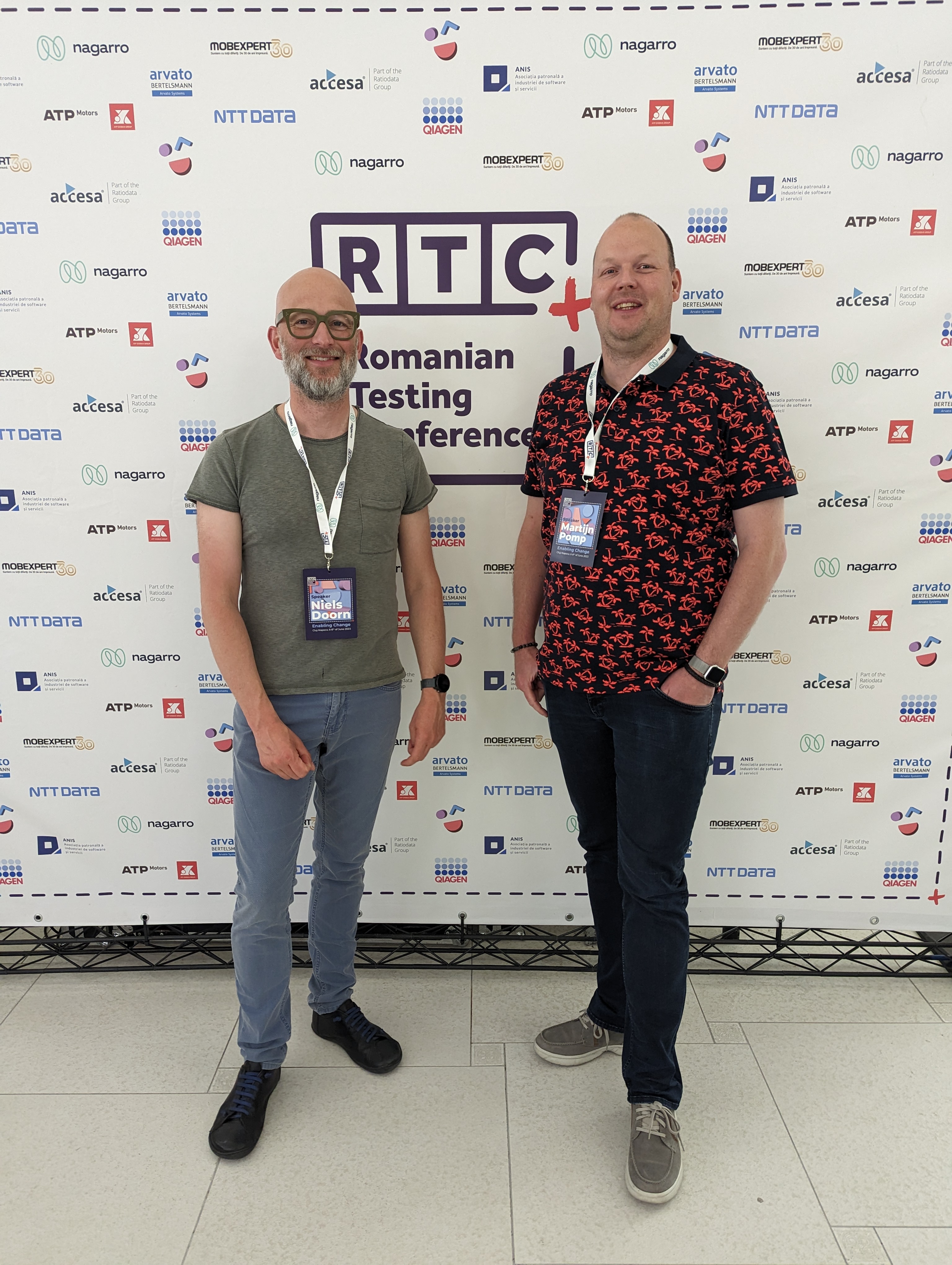
This year, it is a three-day event, with more time allocated for tutorials. We are attending two whole day tutorials on testing.
This tutorial was very interesting. Peter explained what exploratory testing is, what the pros and cons are, and how to do it. He presented many approaches, tour-based, persona based and De Bono’s thinking hats based approaches. It was a very hands-on tutorial, so we got to test a live production system very thoroughly using these approaches. The amount of issues we uncovered was huge.
I really liked the pair-testing way of working. One takes the role of observer and keeps a log of the testing session, and the driver does the testing. This way, both peers can focus on one thing and this reduces the need to keep on switching between testing and logging.
We attended this tutorial with the idea to see how we can improve our testing education. The idea behind the tutorial was good, however, the tutorial failed to convince in some ways. The concepts explained are relevant, however the examples given are somewhat controversial, and the sheets contained some critical errors.
Day three, the last day, is the conference day. In the afternoon is our presentation, before that lots of interesting talks and keynotes.
The first keynote speaker stated that testing is a form of technical leadership, which I like. He also talked about approaching testing in the same way as a doctor does a diagnosis. Something I am researching as well. His motive was that the people who pay for testing do not care about how we test, but at the result. If a doctor has a medicine, most patients want that medicine. This is different from my research perspective, but might be another reason to shift the teaching paradigm from the rational approach to the emperical approach.
The second talk is about improving the performance of end-to-end tests. Something not directly applicable for me, but interesting nonetheless.
The third presentation is about nudging. Something I really like in education and in everyday live. The ideas to apply it in testing were very nicely presented, and the underlying theory was nicely connected. All in all a very interesting presentation.
The next presentation I really liked was about becoming a nice person to work with. It was based on improv theatre, and really interactive. It was about failing, and communicating clear intents.
After that we attended a presentation about software failures that happened. It is always good to learn from mistakes others make, but it is also a good idea to keep a personal log of made mistakes to look back on in time.
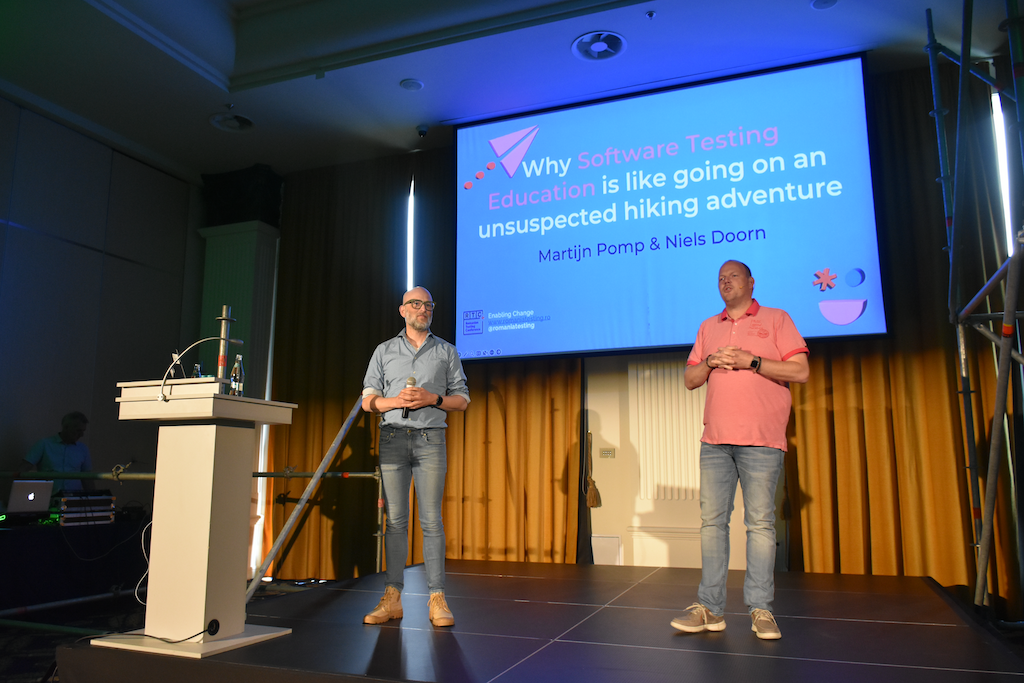
Before the final keynote was our presentation. Based on the reactions during and afterwards from the audience, it was a success! We really enjoyed doing it. It was a good talk at the end of the day, when most people become overwhelmed with information. Our presentation was about the experience we had last year the day after RTC2022 when we went on a hiking adventure with a guide. During that hike we saw a lot of similarities with what we encountered during that hike and the way students learn software testing.
]]>